
In lifting and rigging operations, every component within the system has a specific function that directly affects safety, load stability, and operational efficiency. Among the most commonly used components are the master link and the connecting link. Although these two parts are often used together within the same lifting assembly, they are not the same product and should not be treated interchangeably.
For B2B buyers, rigging engineers, and industrial operators, understanding the difference between these components is essential for selecting the correct lifting configuration and ensuring compliance with safety standards.
What Is a Master Link?
A master link is the primary connection point used in lifting assemblies. It is typically installed at the top of a sling system and serves as the main attachment between the lifting equipment and the crane hook or lifting device.
The master link is designed to distribute load forces evenly across one or multiple sling legs. Because it acts as the central load-bearing component, it must be manufactured with high strength and strict dimensional accuracy.
Main Characteristics of a Master Link
● Designed as the top connecting point in lifting systems
● Commonly manufactured from forged alloy steel
● Available in single-leg and multi-leg sling configurations
● Engineered for high load-bearing capacity
● Often used in chain slings, wire rope slings, and synthetic sling systems
In lifting operations, the master link is responsible for transferring the load from the sling assembly to the lifting equipment safely and efficiently.
What Is a Connecting Link?
A connecting link is a separate component used to join different parts of a lifting or chain system together. Unlike a master link, which serves as the main lifting point, the connecting link acts as an intermediary connection within the assembly.
It is commonly used to attach hooks, chains, shortening clutches, or other rigging hardware.
Common Functions of a Connecting Link
● Connecting chain sections together
● Joining hooks to lifting chains
● Creating flexible rigging assemblies
● Allowing removable or replaceable connections
● Supporting load transfer between components
Because connecting links are used within the system rather than at the primary lifting point, their design and operational role differ significantly from that of a master link.
Why the Difference Matters
In industrial lifting applications, using the correct component in the correct position is critical for safety and system performance. Confusing a master link with a connecting link can lead to improper load distribution and increased operational risk.
Structural Differences
A master link is generally larger and designed to withstand the combined load of multiple sling legs. Its shape and dimensions are optimized for direct connection to crane hooks or lifting devices.
A connecting link, on the other hand, is typically smaller and designed to connect individual components within the lifting assembly.
Functional Differences
● The master link serves as the main lifting interface
● The connecting link joins secondary components within the system
● The master link carries the primary load path
● The connecting link supports internal load transfer
These differences make each component essential in its own specific role.

Applications in Modern Rigging Systems
Both master links and connecting links are widely used across multiple industries where heavy lifting and load handling are required.
Construction and Infrastructure
Large lifting systems used in steel erection, bridge construction, and heavy machinery installation rely on master links to distribute loads evenly across sling assemblies.
Connecting links are used to attach hooks and chains in modular lifting setups.
Marine and Offshore Operations
In offshore lifting and marine rigging environments, equipment must withstand dynamic loads and harsh environmental conditions. High-strength master links are commonly used in crane lifting systems, while connecting links provide flexibility within chain assemblies.
Manufacturing and Industrial Plants
Factories and material handling systems use lifting assemblies that combine both master links and connecting links for safe equipment movement and positioning.
Logistics and Cargo Handling
Heavy cargo loading operations often require chain sling systems that depend on properly selected rigging hardware to ensure safe lifting performance.
Material and Manufacturing Requirements
The reliability of lifting components depends heavily on manufacturing quality and material selection.
Common Materials
● Forged alloy steel for high-strength lifting applications
● Heat-treated steel for improved fatigue resistance
● Corrosion-resistant coatings for harsh environments
Important Manufacturing Features
● Precision forging for structural integrity
● Accurate dimensional control for compatibility
● Surface treatment to improve durability
● Compliance with international lifting standards
Because these components operate under heavy loads, strict quality control is essential.
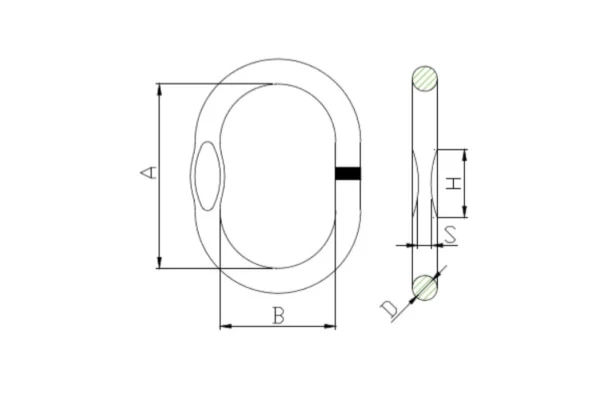
How to Select the Right Master Link
Choosing the correct master link requires evaluating several operational factors.
Key Selection Considerations
● Working Load Limit (WLL) requirements
● Number of sling legs in the assembly
● Crane hook dimensions and compatibility
● Lifting angle and load distribution
● Environmental conditions such as corrosion exposure
Selecting the wrong size or configuration may reduce lifting efficiency and compromise safety.
Company Introduction: Choose WAC
Qingdao Wancheng Anchor Chain Co., Ltd. (WAC), established in 2006, specializes in the production of high-quality marine anchor chains and mooring equipment. The company offers products ranging from 16mm to 122mm in diameter and has obtained certifications from ABS, LR, and BV classification societies.
WAC products are widely used in shipbuilding, offshore platforms, and deep-sea aquaculture projects. With advanced production capabilities, strict quality control systems, and extensive industry experience, WAC provides reliable lifting and mooring solutions for global industrial customers.
The Importance of Proper Rigging Component Selection
As lifting operations become more complex and safety standards continue to increase, choosing the correct rigging hardware has become more important than ever. Components such as the master link are critical because they directly influence load stability and lifting reliability.
Understanding the distinction between a master link and a connecting link allows businesses to design safer and more efficient lifting systems while reducing long-term operational risks.
结论
Although both products are used in lifting systems, a master link and a connecting link serve very different purposes. The master link functions as the primary lifting connection point, while the connecting link joins internal rigging components together.
Using the correct component in the correct application is essential for maintaining safety, load control, and operational efficiency. By selecting high-quality rigging hardware and working with experienced manufacturers such as WAC, businesses can improve lifting reliability and support safer industrial operations.
常问问题
Q1: Is a master link stronger than a connecting link?
In most lifting systems, the master link is designed to carry the primary load and often has a higher load capacity.
Q2: Can a connecting link replace a master link?
No. These components serve different functions and should not be used interchangeably.
Q3: What materials are commonly used for master links?
Forged alloy steel and heat-treated steel are commonly used for high-strength applications.
Q4: How often should lifting hardware be inspected?
Lifting components should be inspected regularly before and during operation to ensure safety and reliability.

 Chinese
 English
 Spanish
 Arabic
 Japanese
 Korean
 Russian
 Portuguese