 перейти к содержанию

Chocks are an indispensable and important part of shipping, port operations and ship safety. They are mainly used for the fixing and management of ship cables to ensure the safety of ships when they are moored in ports. However, different types of chocks differ in function and structure. The two most common types are Panama Chocks and Closed Chocks.
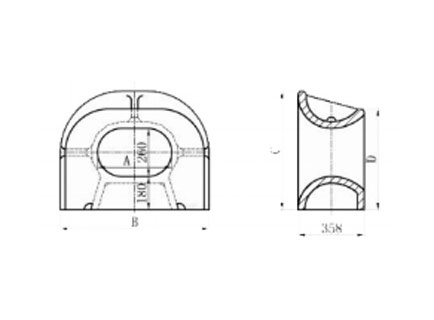
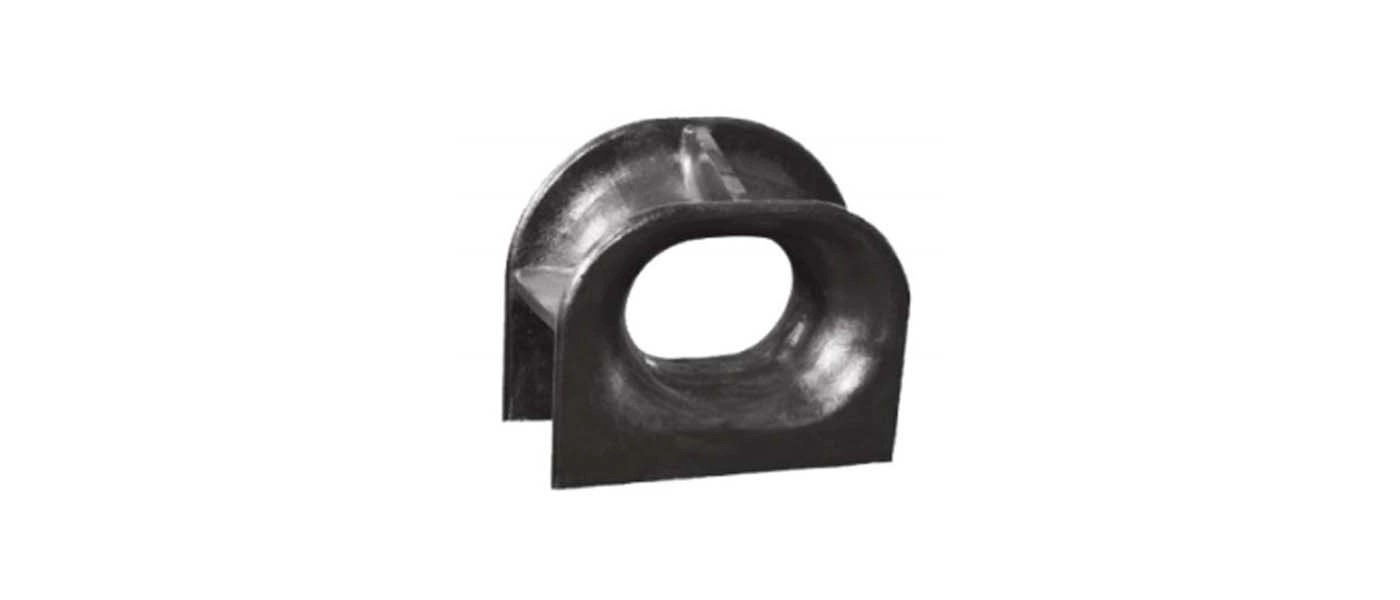
Basic Concepts of Chocks
Chocks are key equipment used by crews to connect ships to port facilities or other ships using cables during ship mooring and navigation. The main function of a chock is to provide a stable fixing point for the ship to prevent the ship from drifting under the influence of wind, waves or tides. Chocks come in various shapes, of which Panama Chocks and Closed Chocks are two common and important types.
Characteristics and Applications of Panama Chocks
Panama Chocks, also known as “open chocks”, are a common type of chock in ship cable mooring systems. It is usually made of metal or steel, with a U-shaped or V-shaped appearance, a relatively simple structure, and the opening part is used to fix the ship’s cables. Due to its open design, the structure of the Panama Chock is relatively open, which is convenient for cables to pass through and tighten.
1. Structure and Design
The design feature of the Panama bolt is that it does not have a completely closed structure, and usually has an opening, which allows the crew to quickly pass the cable through the opening of the bolt to carry out the mooring work during operation. This design facilitates the installation and unloading of the bolt and reduces the time cost during operation.
2. Applicable environment
The Panama bolt is generally suitable for most ports and waterways, especially in areas with strong tidal changes and wind and waves. This is because its structural design can better cope with emergencies in strong winds and waves, ensure that the cable is quickly fixed, and maintain the stability of the ship.
3. Advantages and Disadvantages
The main advantage of the Panama bolt is its simple and efficient structure, which allows the crew to operate quickly, especially when it is urgent to fix the ship. However, due to the openness of its design, the Panama bolt may not provide the same stability as the closed bolt in some extreme environments, especially when encountering strong external forces, the fixing effect of the bolt may be reduced.
Characteristics and Application of Closed Bolts
The closed bolt is a bolt with a more complex structure. Its biggest feature is that the bolt design is completely closed, usually with strong bearing capacity and stability. The structure of the closure bolt allows the cable to be completely wrapped inside the bolt, providing a stronger fixing effect.
1. Structure and design
The closure bolt is usually made of strong metal or alloy material, and is designed as a closed ring or closed hemispherical structure. Unlike the Panama bolt, the design of the closure bolt ensures that the cable is firmly fixed inside the bolt and is not easy to slip off. Therefore, the closure bolt can provide better stability when subjected to external tension or friction.
2. Applicable environment
Closing bolts are common in ports or waterways that require higher ship fixing. For example, in extreme climates or volatile seas, closing bolts can better protect ships from external influences. In the berthing process of some large commercial ships or tankers, the use of closing bolts can effectively reduce the risk of slippage of ships during berthing.
3. Advantages and disadvantages
The advantage of the closure bolt is that its design is high in strength and stability, which can provide reliable fixing in extreme environments. However, due to its complex structure, the installation and unloading time of the closure bolt is usually longer, and the operation difficulty is relatively high. In addition, since the cable is completely wrapped in the bolt, the crew may need more space and time to make adjustments during operation.
The main differences between the two
1. Structural design
Panamar bolts are usually open-type designs with obvious openings to facilitate the passage of cables and quick tightening. The closed bolt is completely closed, and the design focuses more on stability and safety.
2. Usage scenarios
Panamar bolts are suitable for environments with small winds and waves and small tidal changes. Its fast and simple characteristics make it a common choice for most ports. The closed bolt is suitable for more complex environments, especially ports with severe tides or bad weather, and can provide stronger fixing force.
3. Stability and safety
Due to its closed design, the closed bolt can better maintain the fixation of the cable when subjected to large tension, thereby providing higher safety. Panama bolts are slightly inferior in this regard. Although its structure is simple, it may be affected under extreme conditions.
4. Difficulty of operation
The structure of Panama bolts is simple, which makes them more convenient to use, especially suitable for occasions that require quick operation. The closed bolt requires more time and skills to operate due to its complex structure.
Which bolt to use
Выбирая, использовать панамский или закрытый болт, необходимо исходить из реальных условий эксплуатации и потребностей. Если судно находится в порту с небольшими приливами и отливами, стабильной погодой и требует относительно быстрой работы, то панамский болт, несомненно, является более подходящим выбором. В ситуациях, когда ветер и волны велики, а судно должно быть надежно закреплено, закрытый болт обеспечивает более стабильную гарантию.
In short, Panama bolts and closed bolts each have their own unique advantages and applicable scenarios. In actual applications, the ship’s operators should choose the most suitable bolt type according to the specific conditions of the port, weather conditions and ship type to ensure the safety and stability of the ship’s berthing.
сопутствующие товары

 Russian
 English
 Chinese
 Spanish
 Arabic
 Japanese
 Korean
 Portuguese