 Ir para o conteúdo

German chock type c is an important marine deck fitting used to guide mooring ropes and protect them from excessive friction during berthing, towing, and daily vessel operations. For shipowners, shipyards, offshore projects, and marine equipment purchasers, choosing the right chock is not only about matching a drawing or a size list. It is also about safety, rope protection, installation reliability, and long-term performance in demanding marine environments.
A chock may look like a simple steel component, but it works under repeated rope tension, side loading, seawater exposure, and heavy deck operation. When the chock design is unsuitable, ropes may wear faster, mooring efficiency may decrease, and deck fittings may face unnecessary stress. German chock type c is widely used because its structure offers smooth rope guidance, practical installation, and dependable performance for different vessel types.
Calço Alemão Tipo C for Marine Mooring Applications
German chock type c is generally installed on the deck or bulwark area to guide mooring lines from the vessel to shore bollards, mooring buoys, or other fixed points. Its main function is to provide a controlled passage for ropes so that the line direction remains stable during mooring operations.
In real ship operation, mooring ropes often work at different angles because of tide changes, berth conditions, vessel movement, and loading status. A well-designed chock helps reduce sharp bending and prevents the rope from rubbing directly against rough steel edges. This is why german chock type c is commonly selected for vessels that require durable and practical mooring fittings.
For ship equipment systems, it is often used together with marine bollards, fairleads, chain stoppers, cleats, anchors, anchor chains, and other outfitting components. When these fittings are properly matched, the whole mooring arrangement becomes safer and more efficient.
Recommended internal link: Learn more about our marine chock products
Recommended internal link: Explore ship outfitting and mooring equipment
Why Does German Chock Type C Matter for Rope Protection?
The first reason buyers pay attention to german chock type c is rope protection. Mooring ropes are expensive consumable parts, and their service life can be shortened quickly if they pass through fittings with poor surface quality or improper curvature.
A reliable chock should have a smooth contact surface, suitable opening size, and strong body structure. These features help reduce friction when the rope moves under tension. During berthing, the rope may repeatedly tighten and loosen because of vessel motion. If the chock has rough edges or inaccurate dimensions, the rope surface may be damaged.
German chock type c helps guide the rope in a more controlled direction. This improves rope stability and reduces unnecessary abrasion. For vessels operating frequently in ports, shipyards, offshore areas, or coastal routes, this advantage can lower maintenance pressure and support safer deck work.
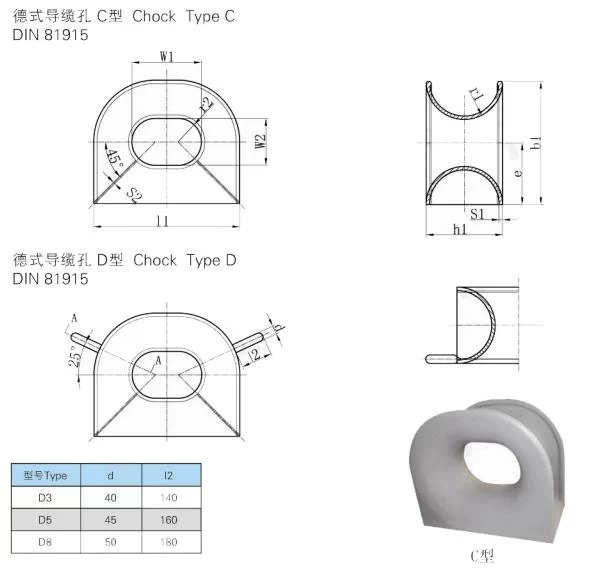
7 Key Benefits of German Chock Type C
Stable Mooring Line Guidance
German chock type c provides a fixed passage for mooring ropes, helping crews maintain a clear and predictable rope direction. This is especially useful when several ropes are handled at the same time during docking or departure.
Strong Structure for Marine Conditions
Marine fittings must withstand harsh conditions, including seawater corrosion, impact, vibration, and load changes. A properly manufactured german chock type c is built with strong steel materials and suitable welding or casting quality, allowing it to perform reliably in long-term vessel service.
Smooth Surface to Reduce Rope Wear
Surface treatment is a key detail for this product. A smooth rope contact area can reduce abrasion and avoid sharp contact points. This makes german chock type c a practical choice for protecting synthetic ropes, wire ropes, and other mooring lines used in marine operations.
Practical Deck Installation
The structure of german chock type c is suitable for installation on different deck layouts. Shipyards and marine engineering companies can select dimensions according to vessel drawings, rope diameter, and mooring arrangement requirements.
Suitable for Multiple Vessel Types
This chock can be used on cargo vessels, workboats, barges, fishing vessels, offshore support vessels, and other marine platforms. Because mooring requirements vary between vessel types, the selected size and specification should always match the actual working load and rope direction.
Helpful for Safer Deck Operations
Clear rope guidance can reduce disorder on deck and make mooring work easier for crews. When ropes run through the correct fittings, the risk of unexpected rope movement or improper contact can be reduced.
Better Compatibility with Ship Outfitting Systems
German chock type c can be supplied as part of a wider ship outfitting package, together with bollards, chain stoppers, closed chocks, anchor releasers, chain wheels, anchors, and anchor chains. This helps keep the deck equipment system more consistent in quality and specification.
Common Applications in Shipbuilding and Marine Projects
German chock type c is widely used in shipbuilding, ship repair, offshore engineering, aquaculture mooring systems, and general marine outfitting. It can support vessels that need stable rope guidance during frequent docking, towing, positioning, or mooring operations.
In shipyards, it is often selected as part of a complete deck outfitting plan. In marine maintenance projects, it may be replaced when old chocks show wear, deformation, corrosion, or poor rope contact conditions. For offshore and fish farming mooring systems, related chock and chain accessories may also be used to improve connection stability and equipment safety.
Because each project has different operating conditions, german chock type c should be matched with suitable marine fittings instead of being treated as an isolated component.
Sobre nós
With nearly two decades of manufacturing experience, Qingdao Wancheng Anchor Chain Co., Ltd. has built a reliable production and quality control system for marine anchor chains, offshore mooring chains, and related accessories. From raw material selection and heat treatment to mechanical testing, dimensional inspection, and final delivery, each process is strictly controlled to ensure product stability, traceability, and compliance with project requirements. Supported by internationally recognized classification society approvals and long-term experience in shipbuilding, offshore engineering, aquaculture, and marine equipment applications, Wancheng is committed to providing customers with dependable products, professional technical support, and consistent delivery performance.
Conclusão
German chock type c is a practical and reliable mooring fitting for vessels that require smooth rope guidance, strong deck support, and long-term marine durability. It helps protect ropes, improve mooring arrangement, and support safer deck operations. For shipyards, vessel owners, and marine equipment buyers, choosing the right chock means considering size, load, material, surface quality, installation position, and compatibility with the full mooring system.
A well-made german chock type c may seem like a small part of the vessel, but it plays a meaningful role in everyday marine safety and operational efficiency. When selected correctly, it can reduce rope wear, support stable berthing, and provide dependable service in demanding maritime conditions.
Perguntas frequentes
What is german chock type c used for?
German chock type c is used to guide mooring ropes on ships and marine structures. It helps control rope direction, reduce friction, and protect ropes from direct contact with sharp or rough deck edges.
How do I choose the correct size of german chock type c?
The correct size should be chosen according to rope diameter, working load, installation position, vessel type, and project drawings. Buyers should also consider surface finish, anti-corrosion treatment, and compatibility with other deck fittings.
Can german chock type c be customized?
Yes, german chock type c can usually be customized based on drawings, dimensions, material requirements, and surface treatment needs. Customization is common for shipbuilding, ship repair, and offshore engineering projects.
Why is surface quality important for german chock type c?
Surface quality is important because the rope directly contacts the chock during mooring. A smooth surface helps reduce rope abrasion, while rough edges or poor finishing may shorten rope service life and increase maintenance risks.

 Portuguese
 English
 Chinese
 Spanish
 Arabic
 Japanese
 Korean
 Russian