
A chain lashing system can look secure when cargo is first restrained, but its condition may change once transportation begins. Vibration, repeated impact, road conditions, and small cargo movements can gradually affect the original tension and change the way forces are transferred through the system.
When this happens, the first reaction is often to assume that the chain needs to be tightened further. However, tension loss is not always caused by insufficient tightening. Chain size, connection geometry, fixing-point position, binder placement, and changes in load direction can all influence how a lashing system performs during transportation.
This is why selecting a suitable G100 catraca encadernação should be considered as part of the complete chain lashing arrangement rather than as a separate component. Understanding where tension changes come from can help identify the right configuration, avoid unnecessary adjustments, and maintain a more stable cargo restraint system throughout its intended application.
When Does a G100 catraca encadernação Start to Lose Tension?
A lashing system may gradually change after the cargo begins moving, even when all components were correctly positioned during the initial installation.
One reason is cargo movement. When the cargo shifts slightly, the angle of the chain can change, which may also change the direction in which force is applied to the connection points.
Vibration is another factor. Unlike a static load, transported cargo is exposed to repeated movement and impact. The lashing system therefore needs to maintain a suitable arrangement under changing conditions rather than only at the moment it is first tightened.
The connection between different components also matters. A chain, hook, binder, and fixing point may each appear suitable individually, but an unsuitable combination can create poor alignment or limit the effective adjustment range.
For this reason, checking a lashing system should involve more than simply asking whether the chain feels tight enough.
What Causes Tension to Change During Transportation?
Several factors can affect the original condition of a chain lashing system after transportation begins.
Cargo Movement
Cargo does not always remain completely stationary. Small shifts can change the angle of the lashing chain and alter the load distribution between different connection points.
The effect becomes more noticeable when the chain is already positioned close to the limit of its useful adjustment range.
Vibration and Repeated Impact
Transportation creates a continuously changing environment. Road vibration, acceleration, braking, turning, and uneven surfaces can repeatedly affect the cargo and its restraint system.
A lashing arrangement that works well under a static condition may therefore need to be evaluated differently when it is exposed to repeated movement.
Incorrect Component Matching
The chain and binder should be treated as a connected system.
Using a binder without considering the chain diameter, chain grade, hook connection, or fixing point can create compatibility problems. Even when individual components appear suitable, the complete arrangement may not provide the intended connection geometry.
Limited Operating Space
The physical position of the binder also matters. If the handle cannot move normally because of nearby structures or cargo, it may be difficult to achieve the intended operating position.
For this reason, the available working space should be considered before the final arrangement is established.
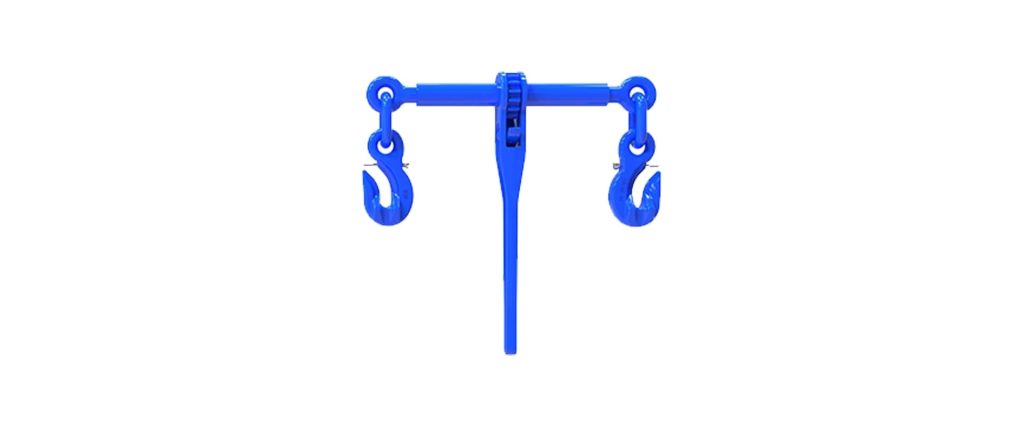
Four Signs That the Lashing Arrangement Needs Attention
Instead of focusing only on the tensioning device, it is useful to look for changes in the complete system.
1. The Chain Position Has Changed
If the chain has moved significantly from its original position, the cargo may have shifted or the load direction may have changed.
The chain should be checked together with its connection points before simply applying additional tension.
2. The Binder Is Difficult to Operate
A binder should have enough space for normal operation.
If the handle is restricted by the cargo, frame, or another component, the installation position may need to be reconsidered.
3. The Connection Appears Misaligned
A hook or chain connection that is visibly forced into an unusual angle can indicate that the components are not working together as intended.
This can happen when the fixing point is poorly positioned or when the selected components do not match the actual arrangement.
4. Tension Changes Noticeably During Use
If the system becomes noticeably different after transportation begins, the cause should be investigated rather than assuming that more initial tension will solve the problem.
Changes in cargo position, chain angle, and load direction can all affect the condition of the system.
Why Does Chain and Binder Matching Matter?
The performance of a chain lashing system depends on more than the tensioning device itself.
A G100 catraca encadernação is designed to work with G100 chain, so the chain grade and diameter should be considered when selecting the corresponding binder. The hook connection, fixing point, and available working space should also be checked.
The following information is useful when confirming a configuration:
| Item | What to Check |
|---|---|
| Chain Grade | Whether the chain grade matches the binder |
| Diâmetro da corrente | Whether the chain size corresponds to the binder specification |
| Hook | Whether the hook fits the chain and fixing point |
| Fixing Point | Whether the connection provides suitable positioning |
| Working Space | Whether the binder can be operated normally |
| Application | Whether the system is intended for cargo lashing |
This approach helps avoid treating the binder as an isolated product.
The correct question is not simply, “Which binder is stronger?” It is, “Which binder works correctly with the chain and connection arrangement being used?”
How Should a G100 catraca encadernação Be Selected?
The selection process can start with the chain rather than the binder itself.
First, confirm the chain grade and diameter. Then consider how the chain will connect to the cargo and fixing points.
The next step is to determine where the binder will be positioned. The handle needs enough room for operation, while the overall arrangement should avoid unnecessary bending or awkward connection angles.
The working environment should also be considered. A compact installation with limited access may require a different arrangement from an open cargo securing point.For repeated applications, it is also useful to consider whether the selected configuration allows convenient inspection and adjustment.
A practical selection process can therefore be summarized as: Chain specification → Connection method → Fixing point → Binder position → Operating space → Actual lashing condition
This is more useful than choosing a component based on size alone.
Where Does the Binder Fit in the Complete Lashing System?
A cargo lashing system normally includes several connected elements rather than a single component.
A typical arrangement may look like: Cargo → Lashing Chain → Hook → Ratchet Binder → Fixing Point
Each part has a different role, but they must work together.For example, the binder may have the correct specification while the hook does not fit the fixing point properly. Alternatively, the chain may be suitable but the binder may not have enough room for normal operation.
These situations show why component selection should be based on the complete arrangement.
The same principle applies when replacing an existing binder. The new component should be checked against the existing chain and connection dimensions instead of assuming that the same nominal diameter automatically means full compatibility.
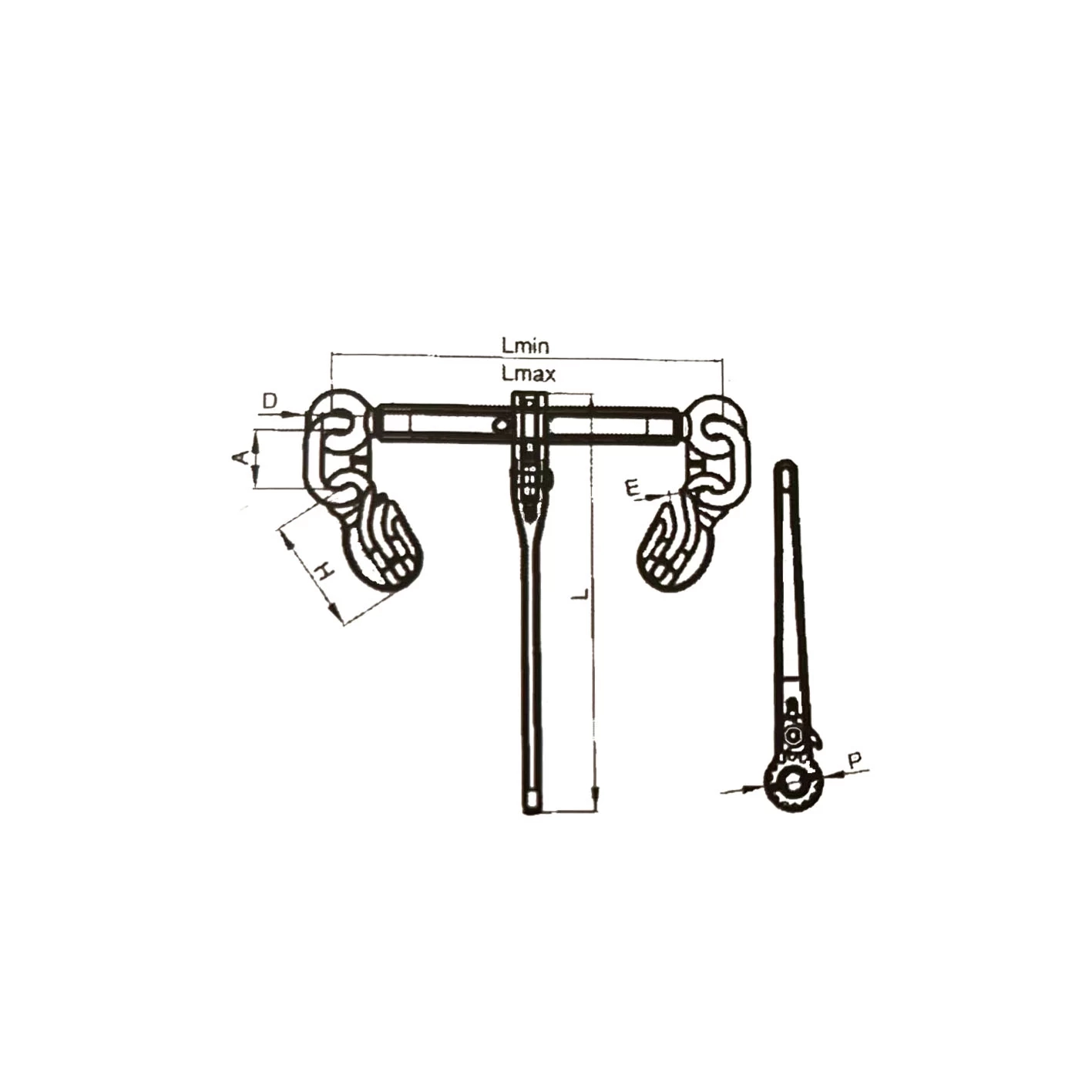
What Should Be Checked Before and During Use?
A simple inspection routine can help identify problems before they become more significant.Before use, check the chain size, connection points, hooks, binder position, and surrounding operating space.
During operation, pay attention to any noticeable changes in chain position, cargo movement, or the condition of the connections.
After transportation begins, the system should be reviewed according to the actual operating conditions, especially when the cargo is exposed to substantial vibration or movement.
The purpose of these checks is not to replace the applicable safety procedures or load calculations. Instead, they provide a practical way to identify obvious changes in the physical arrangement.
What Information Helps With Product Matching?
When a G100 Ratchet Binder needs to be selected for a specific application, several pieces of information can make the matching process more accurate.
Useful information may include:
- G100 chain diameter
- Chain configuration
- Hook or connecting component type
- Fixing-point dimensions
- Available operating space
- Existing lashing arrangement
- Application environment
- Drawings or photos of the connection area
This information allows the binder to be considered as part of the actual system rather than as an independent component.
It is especially useful when replacing an existing part, developing a new cargo restraint arrangement, or working with a non-standard connection.
How Wancheng Supports Chain and Lashing Component Matching
Qingdao Wancheng Anchor Chain Co., Ltd. manufactures anchor chains, mooring products, chain accessories, and related lifting and lashing components.
For applications involving multiple connected components, product selection can be reviewed according to chain dimensions, connection requirements, drawings, and existing system information.
This type of technical matching is useful when the application requires more than simply selecting a standard product from a size table. The relationship between the chain, binder, hook, and fixing point can be considered together so that the selected components better correspond to the actual installation conditions.
For a G100 Ratchet Binder application, providing the chain size, connection structure, or project drawings can help clarify the required configuration and related components.
Conclusão
A G100 catraca encadernação is one part of a complete cargo lashing system, and its performance depends on how it works with the chain, hooks, fixing points, and cargo arrangement.
Tension loss should not automatically be treated as a problem caused by insufficient tightening. Cargo movement, vibration, connection geometry, component matching, and binder positioning can all influence how the system behaves during transportation.
A more practical approach is to evaluate the complete lashing arrangement from the beginning. Confirming the chain specification, connection method, fixing point, binder position, and available operating space can help establish a more suitable configuration.
When the application involves specific dimensions or an existing connection structure, these details can also be used to confirm the compatibility of the G100 Ratchet Binder with the rest of the system.
Perguntas frequentes
1. How do I choose the right G100 Ratchet Binder?
Start with the G100 chain grade and diameter, then check the hook connection, fixing point, available operating space, and actual lashing arrangement. These factors should be considered together rather than selecting the binder based only on chain diameter.
2. Why can a chain lashing system lose tension during transportation?
Cargo movement, vibration, repeated impact, changes in chain angle, unsuitable component matching, and limited adjustment or operating space can all affect the original lashing condition.
3. What information is useful when matching a G100 Ratchet Binder?
Chain diameter and grade, hook type, fixing-point dimensions, installation space, existing lashing configuration, and project drawings or connection photos can all help with product matching.

 Portuguese
 English
 Chinese
 Spanish
 Arabic
 Japanese
 Korean
 Russian